Polyend Mess, in a production landscape where sound design and performance tools continue to merge, Polyend introduces a device that sits firmly at the crossroads of both worlds. The Mess is a multi-effect processor with integrated step sequencing, designed to inspire experimentation in the studio and on stage.
Positioned as more than a traditional effects pedal, the Mess targets musicians, DJs, and producers looking for deep control over time-based and modulation effects within a compact hardware unit.
What Is the Polyend Mess?
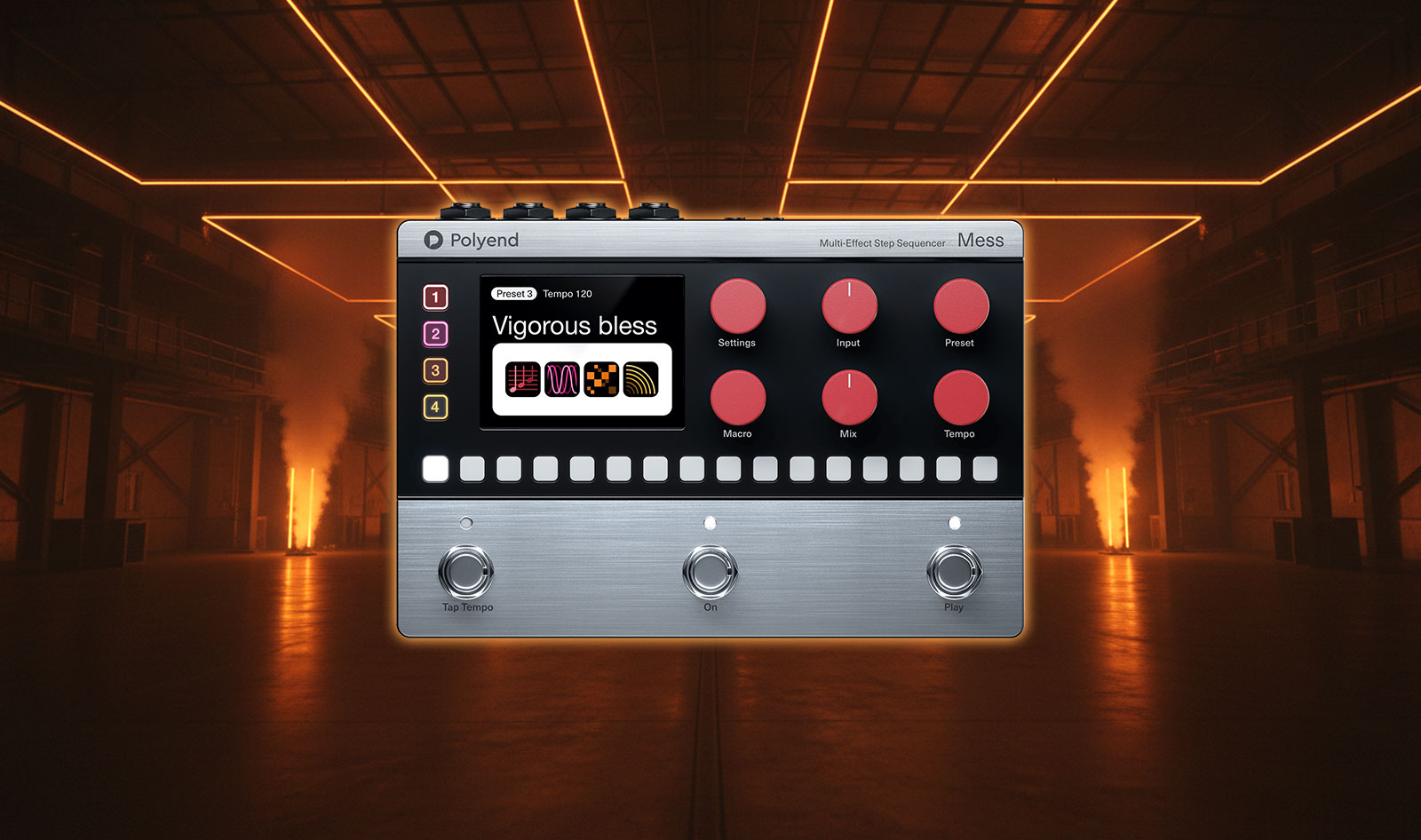
The Mess is a multi-effect step sequencer built around four independent effect engines. Each engine features its own 16-step sequencer, allowing parameters to evolve rhythmically over time. This approach transforms effects from static processors into dynamic musical elements.
Rather than focusing on a single sound-shaping role, the Mess is designed to function as a creative hub for guitars, synthesizers, drum machines, and full mixes.
Effects Architecture and Sound Engine
At the core of the Mess is an extensive library of effect algorithms. With more than 120 effects spread across 11 categories, the unit covers a wide sonic territory, from conventional processing to more experimental textures.
Routing flexibility plays a central role in the design. Effects can be arranged in different configurations, making it possible to build complex signal chains that respond musically to tempo and sequencing.
Connectivity and Integration
The Mess is built to integrate easily into modern hardware and hybrid setups. Stereo operation is supported throughout, ensuring compatibility with contemporary instruments and production workflows.
MIDI and USB connectivity allow the device to sync with external gear and software environments, while onboard storage simplifies preset management and firmware updates.
Interface and Workflow
A color OLED display sits at the center of the interface, providing clear visual feedback for parameters and sequences. The control layout relies on rotary encoders positioned on either side of the screen, each mapped directly to on-screen parameters.
While the design may feel unconventional at first, it encourages hands-on interaction once users become familiar with the layout. This makes the Mess particularly suited to exploratory sound design and live manipulation.
Pros and Cons
Pros:
Extensive library of over 120 effect algorithms
Four independent effect engines with 16-step sequencing each
Flexible routing options for creative signal chains
Stereo inputs and outputs for modern production setups
Suitable for both studio work and live performance
Cons:
Learning curve due to the unconventional control layout
Premium pricing compared to standard multi-effects units
Pricing and Availability
Polyend Mess is available for €599/$579
Conclusion
The Polyend Mess stands out as a forward-thinking effects processor that treats sound manipulation as an active, sequenced process rather than a static one. By combining a deep effects engine with step-based modulation, it opens new creative possibilities for producers and performers alike.
For musicians seeking a versatile and expressive hardware effects unit capable of evolving textures and rhythmic transformations, the Mess represents a compelling addition to a modern setup.