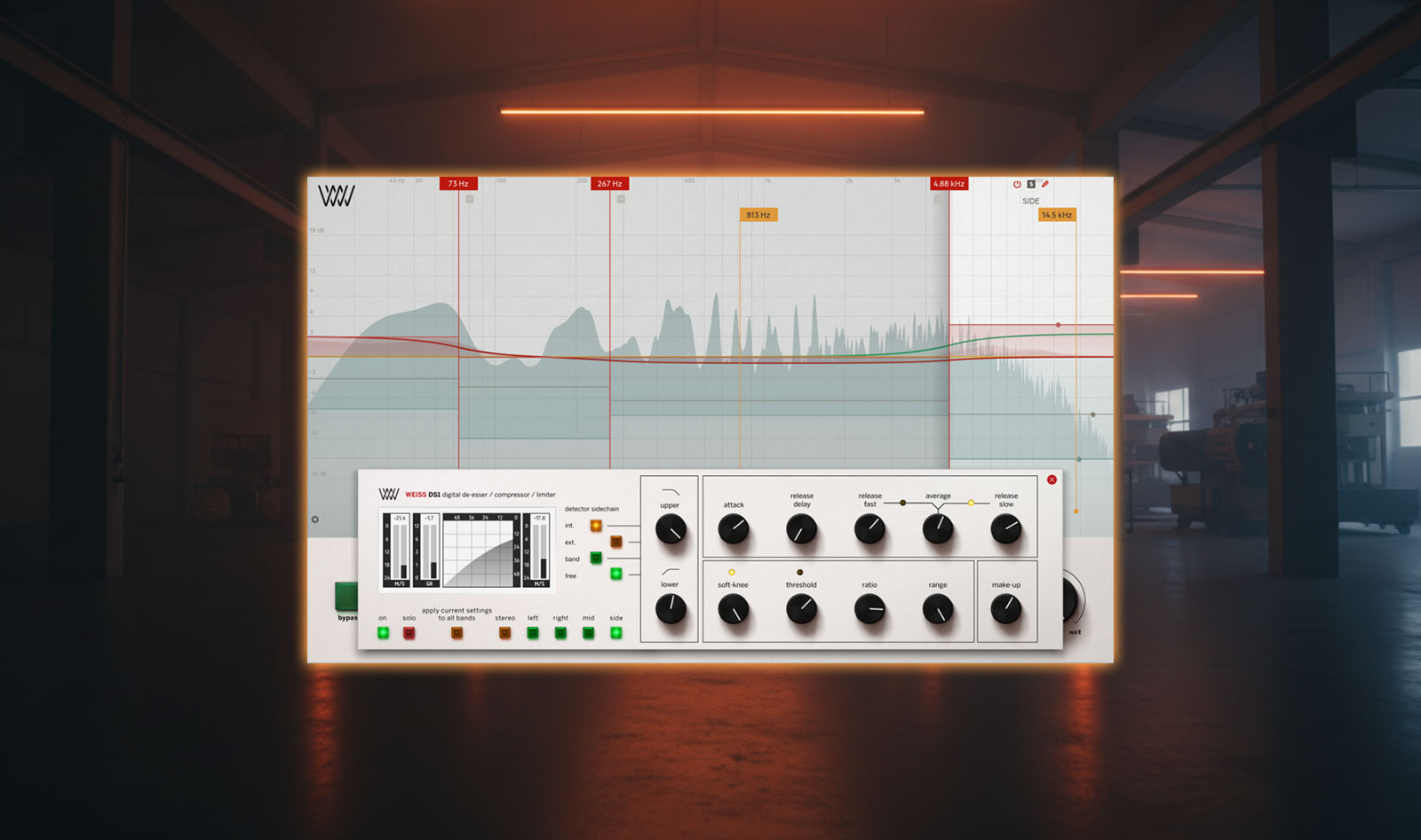
Softube’s Weiss DS5 Multiband Compressor brings the signature Weiss DS1-MK3 dynamics approach into a modern multiband workflow, offering detailed control over compression and expansion across up to five frequency ranges. Built in collaboration with Weiss Engineering, DS5 is designed for transparent, precise processing that can suit mastering, mix-bus duties, and focused corrective work on individual tracks.
Rather than aiming for coloration, DS5 focuses on control that stays out of the way of the music. The goal is to let you solve mix problems—overactive low end, hard upper mids, inconsistent vocals, or spiky percussion—without introducing the audible “band seams” and phase oddities that can make multiband processing feel obvious or unnatural.
What DS5 Adds to the Weiss Workflow
The Weiss DS1-MK3 is often associated with clean, reliable dynamics in high-end production and mastering contexts. DS5 expands that concept into a multiband processor that can be configured from one band up to five. Each band targets a chosen frequency region, letting you apply dynamics exactly where it is needed: tightening low-frequency movement, calming midrange build-up, or smoothing the high end without pulling down the entire signal.
This multiband approach is especially useful on dense modern productions where different parts of the spectrum behave very differently. A single full-band compressor can sometimes force compromises—either you clamp down enough to control the bass and the mix loses life, or you keep it gentle and the low end still blooms. With DS5, you can keep the overall movement intact while applying more specific control to the areas that actually need it.
Macro Controls First, Deep Band Control When You Need It
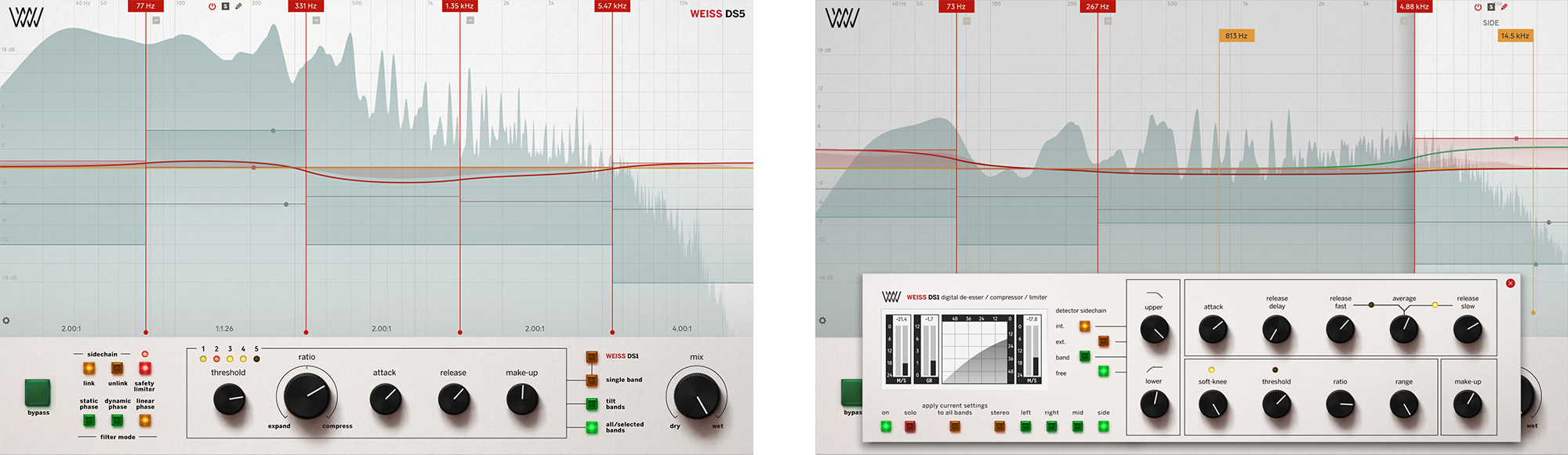
Many multiband compressors deliver power at the cost of workflow: lots of parameters, lots of windows, and a lot of time spent managing band-to-band consistency. DS5 tackles that by combining a macro-style front panel with the option to open full DS1-MK3-style controls per band.
In practical terms, this means you can start quickly with broad, musical adjustments that affect the bands in tandem. When a band needs special handling, you can switch focus to that band and access the detailed controls that make the DS1-MK3 such a trusted tool. This structure encourages a sensible process: establish the overall dynamic “feel” first, then refine the specific ranges only if the track demands it.
For DJs and producers working on stems or pre-masters, that balance can be a real advantage. DS5 can act like a fast stabilizer on a mix bus, but it also has the depth to become a precise problem-solver when a particular frequency range is jumping out or collapsing under pressure.
Transparency-Focused Crossovers and Phase Modes
A multiband compressor is only as good as its crossover design. Splitting the audio into frequency bands and recombining it after processing can easily introduce artifacts or phase issues, especially when the gain reduction is moving dynamically. DS5 uses phase-compensated 24 dB/octave crossover filters, and it provides three selectable filter modes: Dynamic Phase, Static Phase, and Linear Phase.
These modes let you choose the best balance between phase behavior and latency for the session. Dynamic Phase and Static Phase are designed for low-latency operation, which can matter when you are tracking, producing in real time, or simply want a more responsive feel. Linear Phase prioritizes phase accuracy at the expense of higher latency, which can be a sensible tradeoff for mastering or offline processing where maximum transparency is the priority.
The key point is flexibility: DS5 is not locked into one technical compromise. You can tailor the crossover behavior to the project instead of forcing every workflow into the same latency and phase characteristics.
Presets Built by Recognized Engineers
DS5 ships with presets designed by well-known professionals, including Bob Katz, Jonathan Wyner, Maor Appelbaum, and Philippe Weiss. In a tool this precise, presets are less about “instant mastering” and more about giving you a reliable starting intent—mix bus control, mastering glue, vocal stabilization, or tightening a drum bus—without having to build everything from scratch.
The best use of these presets is as a foundation: load one that fits the goal, listen carefully, adjust the macro controls until the behavior matches the material, then open band-specific controls only if a certain region needs extra attention. This approach keeps the workflow efficient while maintaining the consistency and repeatability that professional dynamics work demands.
Where DS5 Fits in Real Sessions
In mastering, DS5 can be used to subtly rein in frequency-dependent changes—such as bass notes that swell too much, or a chorus that gets slightly sharper—while keeping the rest of the mix open. On a mix bus, it can provide frequency-aware stabilization that helps a track feel more “finished” without turning into an obvious effect.
On individual sources, multiband dynamics can be equally valuable when used carefully. Vocals can benefit from gentle, targeted control in the presence region without dulling air. Drums can be tightened by controlling low-end sustain while leaving attack intact. Synth-heavy arrangements can be made more consistent by smoothing harsh midrange peaks that only appear at certain moments.
Pros and Cons
Pros:
- Up to five-band dynamics control for targeted compression and expansion
- Macro-driven workflow for fast results, with full per-band DS1-MK3-style controls when needed
- Three crossover modes (Dynamic Phase, Static Phase, Linear Phase) to balance transparency and latency
- Transparency-focused filter design intended to reduce pre- and post-ringing artifacts
- Professional presets from established engineers to speed up real-world workflows
Cons:
- Premium pricing positions it primarily for professional or serious enthusiast users
- Multiband processing requires careful listening; heavy-handed settings can reduce natural movement
- Linear Phase mode introduces higher latency, which may be less suitable for real-time monitoring
Pricing and Availability
Softube lists Weiss DS5 Multiband Compressor at $549 / €549, with an introductory price of $449 / €449 available until April 7, 2026. It can also be purchased as part of Weiss Complete Collection 3, which is promoted with its own introductory pricing during the same period.
More Info
Get more info on the official website of Softtube.
Conclusion
Softube’s Weiss DS5 Multiband Compressor is built for engineers who want maximum control over dynamics while keeping the original tone intact. By combining up to five bands of processing with a macro-focused workflow, it can move quickly from broad stabilization to highly specific corrections, without forcing the user into a slow, menu-heavy interface.
For mastering and mix-bus work, DS5’s crossover modes and transparency-oriented design help it behave as a refined problem-solver rather than a character effect. And for modern productions with dense arrangements and wide frequency demands, its ability to target movement in specific ranges can be a practical advantage when a track needs to feel controlled, energetic, and clean.