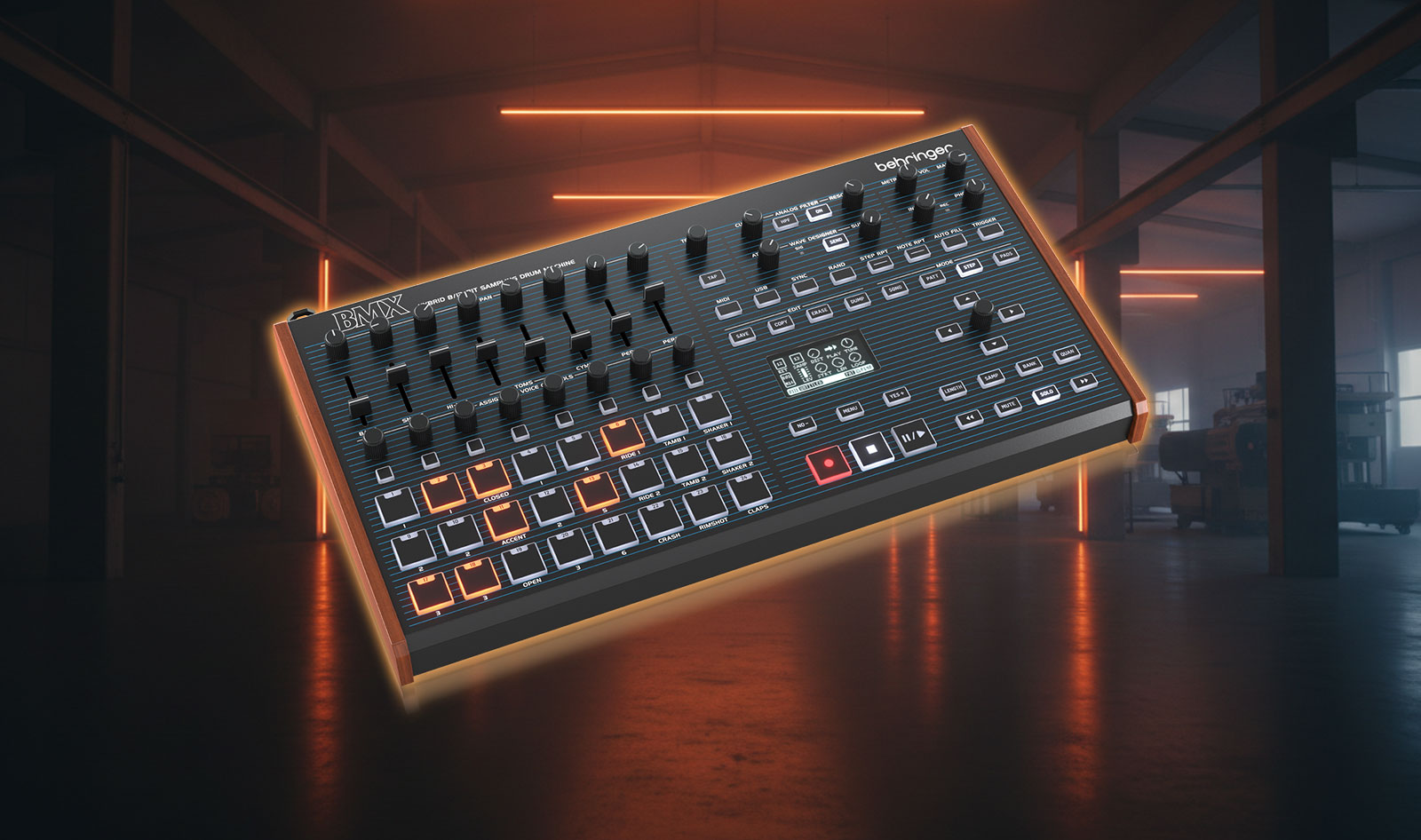
Behringer BMX is a hybrid sampling drum machine designed to capture the attitude of classic early-80s machines—most notably the Oberheim DMX—while adding the features modern producers expect in 2026.
Rather than chasing an exact one-to-one recreation, BMX blends DMX-style drum character with a flexible sample engine, hands-on performance controls, and a powerful sequencer that can move from tight, old-school grooves to evolving, probability-driven patterns.
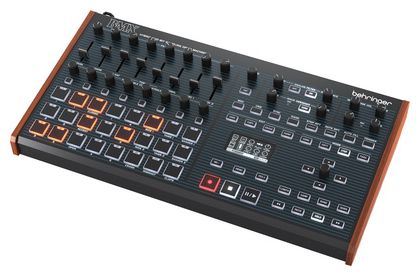
Inspired by an 80s icon, updated for modern studios
The original Oberheim DMX (released in 1980) is frequently referenced in discussions about early hip-hop and electronic production, thanks to its punchy, sample-based sound and distinctly “digital” tone. Behringer’s BMX takes that sonic DNA as a starting point, aiming to deliver similar bite while improving playability, connectivity, and sequencing depth for today’s hybrid workflows.
That philosophy shows up throughout the design: the BMX is immediate enough to treat like a classic drum machine, yet it is open-ended enough to serve as a kit-based sampler for personalized drum palettes.
Sound engine and hands-on performance control
BMX provides eight channels, and each channel has its own 1/4″ analogue output. That multi-out approach is a big deal for studio users, because it makes it easy to route individual drums into external EQ, compression, saturation, or even a DJ mixer channel strip for hands-on shaping.
A dedicated DAC is designed to support variable sample rates and adjustable 8/12-bit resolution. In practical terms, this is how BMX leans into “vintage grit”: lowering resolution or changing the sampling behavior can emphasize the crunchy edges and punch that many producers associate with classic digital drum machines.
For performance and fast programming, Behringer equips BMX with 24 velocity-sensitive pads. Compared with small step buttons on many older units, velocity-sensitive pads make it easier to play expressive accents, record dynamic patterns in real time, and keep a groove feeling alive.
Built-in library, sampling, and tone-shaping tools
Alongside DMX-inspired sounds, BMX includes 121 onboard samples and also draws from the Oberheim DX family, giving users a broader palette of classic drum-machine material. This is a practical starting point for genres that rely on iconic drum textures, from electro and synthwave to house, techno, and pop.
Where BMX steps beyond the “clone” idea is sampling flexibility. Users can import their own samples and can also record audio via the line input. That means you can build custom kits from vinyl hits, field recordings, vocal chops, synthesizer one-shots, or resampled loops from a live set—without leaving the hardware workflow.
Behringer also adds on-device shaping tools intended to speed up sound finishing. BMX includes an analogue filter with low-pass and high-pass modes, useful for tightening lows, taming harsh highs, or carving space in a busy mix. It also features Behringer’s Wave Designer transient shaper, aimed at adjusting punch and sustain without immediately reaching for external plug-ins or outboard processing.
Sequencing that goes beyond classic step programming
The BMX sequencer is built around a 64-step workflow, but its feature set goes well beyond straightforward step entry. It supports swing for groove, flams for thicker hits, and randomization for variation. Crucially, it also supports polymetric and probabilistic sequencing, which can help create patterns that evolve naturally over time—ideal for modern electronic styles where repetition needs subtle movement rather than obvious fills.
Memory and arrangement tools are designed for both production and performance. BMX can store up to 256 patterns and 16 songs. Pattern Mode is designed for arranging patterns into complete tracks, while Song Mode enables chaining songs together for live sets—useful for performers who want a structured show flow without relying on a laptop.
Connectivity and integration
Despite its accessible pricing, BMX is designed to fit into modern rigs. It includes MIDI In/Out/Thru via 5-pin DIN, plus USB MIDI for direct connection to computers and modern hardware. On the audio side, it offers a 1/4″ stereo output and a dedicated headphone output, while the eight individual channel outputs support detailed mixing and external processing.
For hybrid and modular-leaning setups, three trigger outputs and sync in/out options can help BMX communicate with clock-driven gear. Combined with the line input for sampling, the BMX can act as a central rhythm brain in a compact performance system.
Who the BMX is for
BMX is aimed at musicians who want the immediacy of a classic drum-machine sound, but with modern requirements like sampling, multi-outs, and advanced sequencing. For hip-hop, electro, and retro-leaning pop, its 8/12-bit flavor can bring nostalgic bite and character. For techno and contemporary club music, the combination of multi-outs, transient shaping, and probability-based sequencing can produce tight, aggressive drums with evolving movement.
DJs building hybrid live sets will also appreciate the performance-oriented layout: velocity-sensitive pads for on-the-fly input, plus song and pattern management that supports structured transitions and reliable playback.
Pros and Cons
Pros:
- Eight-channel architecture with individual 1/4″ analogue outputs for flexible mixing and external processing
- Dedicated DAC with variable sample rate and adjustable 8/12-bit resolution for vintage-style grit
- 24 velocity-sensitive pads that support expressive playing and dynamic programming
- 121 onboard samples plus the ability to import samples or record via the line input
- Analogue filter (low-pass/high-pass) and Wave Designer transient shaping for fast on-device sound finishing
- 64-step sequencer with polymetric and probabilistic sequencing, swing, flams, and randomization
- Generous storage for projects and live use: up to 256 patterns and 16 songs
- Solid connectivity for the price: MIDI DIN, USB MIDI, stereo outs, headphones, trigger outs, sync I/O, multi-outs, and sampling input
Cons:
- Regional availability may vary at launch, depending on retailer stock schedules and delivery timelines
- The approach is DMX-inspired rather than a strict replica, which may matter if you are seeking an exact historical recreation
- Pricing can differ substantially by region and retailer, so comparing local listings is worthwhile
Pricing and Availability
The Behringer BMX is listed at $459 / €384
More Info
Get more info on the official product page at the Behringer website.
Conclusion
Behringer BMX targets the sweet spot between classic drum-machine attitude and modern flexibility. Its DMX-inspired direction is supported by an intentionally gritty 8/12-bit-capable approach, while multi-outs, sampling, and on-device shaping tools keep it practical for today’s studios and live rigs.
With deep sequencing features—especially polymetric and probabilistic options—plus strong connectivity for hybrid setups, BMX is positioned as an accessible drum machine for producers who want vintage character, hands-on control, and contemporary creative options in one box.