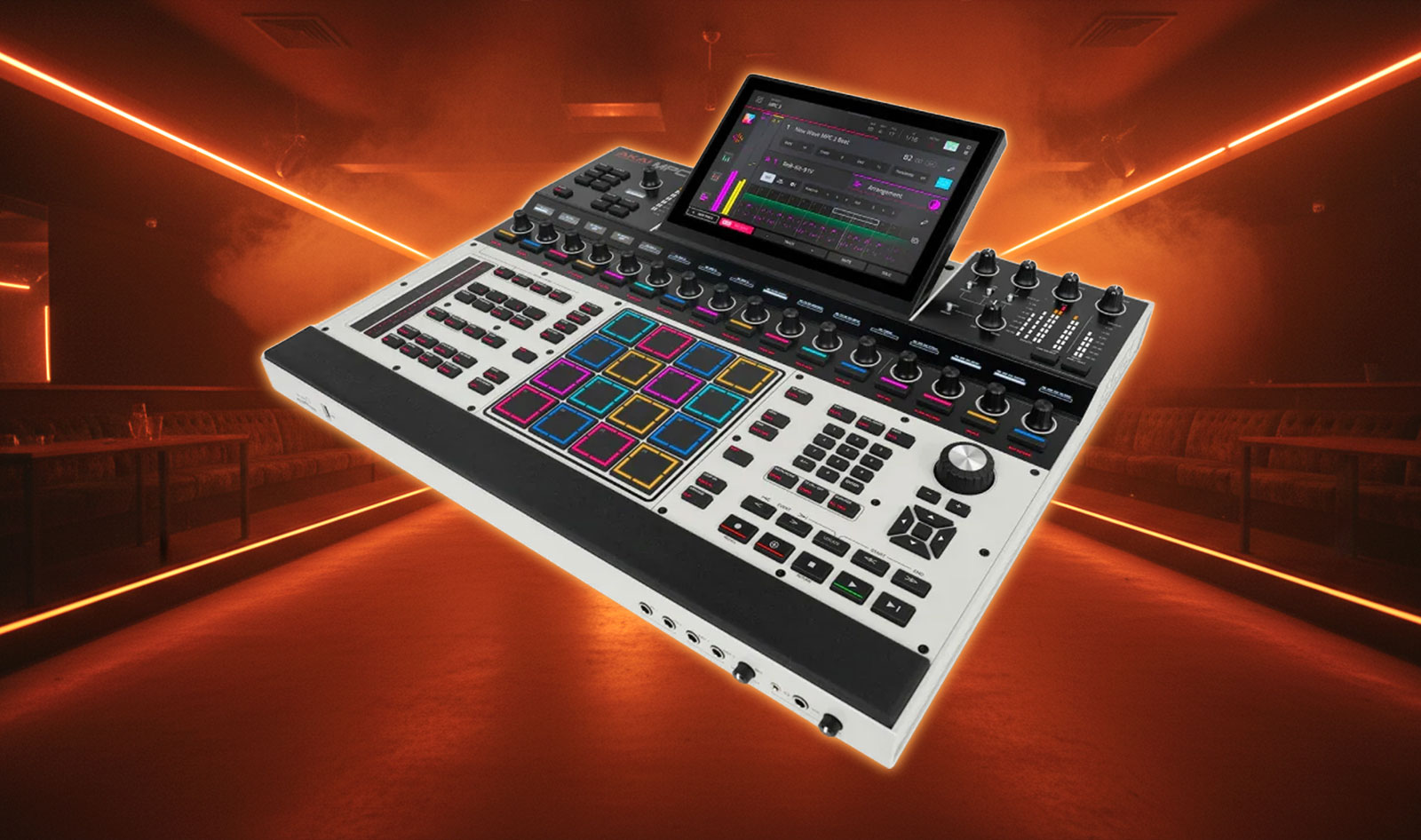
Akain just announce the MPC XL, a modern MPC that feels less like a beat machine and more like the center of a studio.
Some pieces of gear feel like tools. Others feel like places you go to work. The Akai MPC XL clearly aims for the second category. This isn’t a portable sketchpad or a couch-friendly beat box. It’s a large, unapologetically studio-focused instrument designed to sit at the heart of a music-making setup — the kind of device you turn on with the intention of finishing ideas, not just starting them.
Rather than chasing portability or novelty, Akai has doubled down on scale, tactility, and depth. The MPC XL feels like a statement: that hardware-based music creation still matters, and that there’s value in slowing down, touching real controls, and committing to a workflow.
First impressions: big, serious, and purpose-built
The first thing you notice about the MPC XL is simple: space.
More surface area means more room to think. The layout feels open and deliberate, with generous spacing between pads, knobs, and buttons. Nothing feels cramped or overloaded. This is a device designed to be used for hours at a time, not something you balance on your lap or pull out for quick inspiration.
The large touchscreen anchors the experience, but it doesn’t dominate it. Instead, it works in tandem with the physical controls, reinforcing the sense that this is a hybrid instrument — one foot in the digital world, the other firmly planted in hands-on hardware.
Key Features
- Large-format MPC workflow in standalone hardware
The MPC XL delivers Akai’s full MPC production environment in a standalone unit, allowing producers to sequence, sample, arrange, and finish tracks without relying on a computer.
- Full-size MPC pads with expressive response
Classic MPC pads provide a responsive and dynamic playing surface for finger drumming, melodic performance, and triggering samples, maintaining the familiar feel the platform is known for.
- Expansive touchscreen with hands-on control
A large, high-resolution touchscreen works alongside dedicated buttons and knobs, making editing, automation, and arrangement feel direct and intuitive rather than menu-driven.
- Deep sequencing and arrangement tools
Beyond loop-based beat making, the MPC XL supports long-form arrangements, detailed MIDI editing, and complex song structures, encouraging full track production inside the hardware.
- Extensive studio connectivity
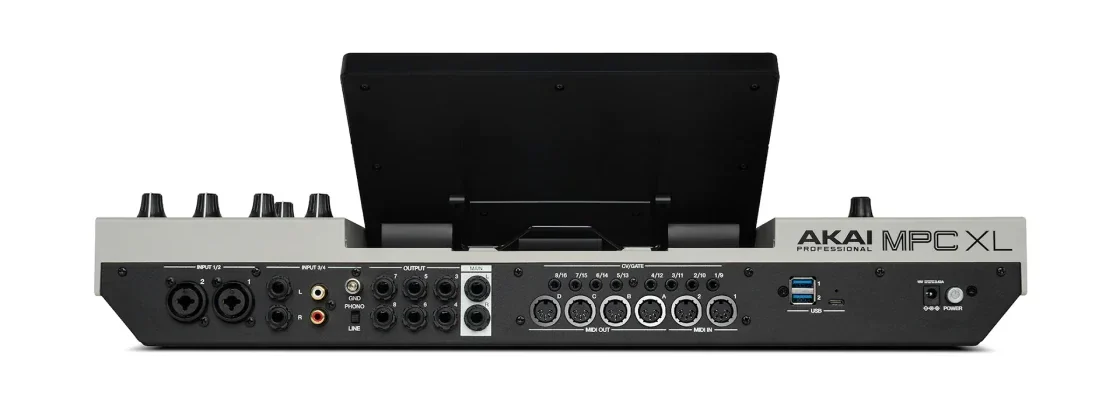
With multiple audio inputs and outputs, MIDI, USB, and CV/Gate connections, the MPC XL is designed to integrate seamlessly with external synths, drum machines, modular systems, and DAW-based studios.
Pads and performance: still the MPC language
At the core, this is still an MPC — and that means the pads matter.
The MPC XL keeps the familiar MPC pad feel: responsive, expressive, and equally comfortable for finger drumming, melodic playing, or triggering longer samples. They invite rhythm-first thinking, but they don’t lock you into it. Chopping samples, playing keygroups, or sequencing external gear all feel equally natural.
What changes with the XL format is context. With more room around the pads and clearer visual feedback from the screen, performance feels calmer and more intentional. You’re less likely to rush. More likely to listen.
Workflow: from sketch to finished arrangement
Where the MPC XL really separates itself is in how it handles full projects.
This is not just a beat launcher. It’s a complete production environment that supports long arrangements, detailed edits, and complex song structures. The sequencing feels confident and flexible, encouraging you to think in sections, variations, and transitions rather than just loops.
The touchscreen makes deeper editing — automation, sample trimming, MIDI manipulation — feel direct rather than buried. You don’t feel like you’re constantly diving through menus; instead, the interface adapts to what you’re doing, whether that’s shaping envelopes, editing MIDI notes, or arranging scenes.
For producers who like to finish tracks inside one system, the MPC XL feels less like a compromise and more like a destination.
Sampling and sound design: deep, but controlled
Sampling has always been central to the MPC identity, and the XL continues that tradition without turning it into a gimmick.
Chopping samples is fast and precise, but more importantly, it’s contextual. You can audition edits directly within your arrangement, hearing how changes affect the whole track rather than isolating sounds in a vacuum. That makes creative decisions feel musical rather than technical.
Sound design tools — filters, envelopes, modulation, effects — are deep enough to shape unique textures without overwhelming the process. The MPC XL doesn’t try to replace a modular synth or a dedicated sound design workstation. Instead, it gives you just enough depth to push ideas further without losing momentum.
Connectivity: built to sit at the center of the studio
The MPC XL clearly expects to be the hub of a setup.
With multiple audio inputs and outputs, MIDI, USB, and CV/Gate support, it’s designed to talk to everything — synths, drum machines, modular rigs, controllers, and computers. Whether you’re running a mostly hardware studio, a hybrid setup, or integrating it into a DAW-based workflow, the MPC XL adapts easily.
What stands out is how naturally external gear fits into the workflow. External instruments don’t feel like “extras” — they feel like extensions of the MPC itself. Sequencing hardware, sampling it back in, and folding it into a project feels cohesive rather than patched together.
Standalone power vs DAW integration
One of the MPC XL’s quiet strengths is that it doesn’t force a choice.
You can work fully standalone, staying away from the computer entirely, or you can integrate it tightly with a DAW when needed. In both cases, the experience feels intentional rather than compromised.
Standalone mode encourages focus. DAW integration offers flexibility. Switching between the two doesn’t feel like changing instruments — it feels like changing contexts.
For producers who want the discipline of hardware with the safety net of software, this balance is a major draw.
Who the MPC XL is really for
The MPC XL isn’t trying to win everyone over — and that’s a good thing.
It’s best suited for producers who:
- Prefer deep, immersive sessions over quick sketches
- Want a central creative instrument, not just a controller
- Work across genres — hip-hop, electronic, pop, experimental, soundtrack, or hybrid styles
- Enjoy shaping full arrangements rather than exporting loops
It’s less ideal for producers who prioritize portability, minimal desk space, or ultra-fast idea capture on the go.
Our thoughts:
The Akai MPC XL feels like a confident evolution of the MPC philosophy.
Instead of shrinking the workflow to fit modern attention spans, it expands it — offering more room, more control, and more depth for producers who want to live inside their music while they’re making it. It doesn’t try to replace every tool in the studio, but it can anchor them all.
For creators looking for a hardware centerpiece that supports long-form thinking, focused production, and hands-on control, the MPC XL isn’t just another MPC. It’s a studio in its own right.
Akai MPC XL enters the market at: £2,499 / $2,899 / €2,899
Pros and Cons:
✅ Pros
- Flagship MPC workflow: deep standalone sequencing, sampling, and arrangement in a single hardware unit
- Large-format control surface: full-size pads, expansive layout, and touchscreen designed for long studio sessions
- Hybrid flexibility: works fully standalone or tightly integrated with a DAW without changing workflow
- Studio-hub connectivity: multi-I/O audio, MIDI, USB, and CV/Gate for integrating external instruments and modular gear
- Genre-agnostic design: equally suited to beat-making, songwriting, sound design, and hybrid production
⚠️ Cons / Trade-offs
- Large physical footprint: requires dedicated desk space and isn’t designed for portability
- Premium pricing: flagship cost may be hard to justify if you won’t use its full depth
- Learning curve: powerful MPC ecosystem can feel complex for first-time users
- Not sketch-focused: slower for quick idea capture compared to smaller MPCs or software tools
📷 Cover Photo Credit : Courtesy of Akai Professional